|
|
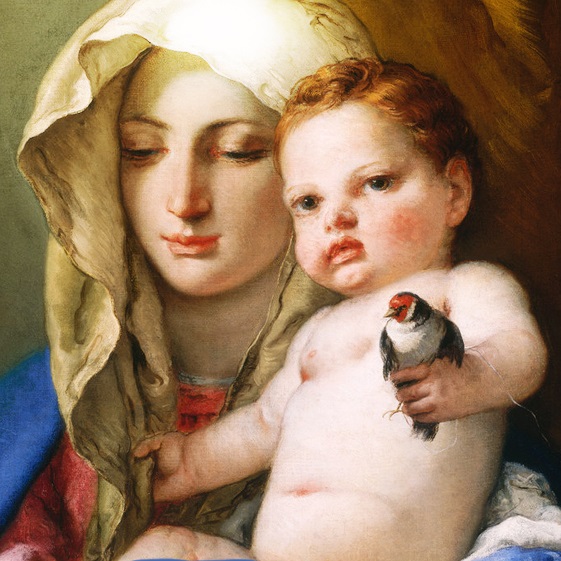
True Faith
My so beloved daughters, My so beloved sons,
Self-knowledge is indispensable. We cannot castrate the processes of doubt, but we can elaborate them, so that faith is true.
More than the conviction that confuses or the belief that leads to disappointments, we need the living feeling of communion with the Higher Spirituality, with the Divinity.
There is no truth where there is no heart. There is only wisdom where there is goodness. Let’s live, as much as we can, the tenderness and the solidarity, without forgetting the rationality and the pragmatic perspective.
One day at a time, but always persisting.
Message from Holy MARY
received, during the speech of 07/07/2013, by Eugênia-Aspásia (Spirit) and Benjamin Teixeira de Aguiar (medium)
The challenge of adaptation
It is not easy at all to adapt to a new reality, but do not forget that adaptability is one of the most important attributes of humanity, constituting one of the elements that distinguish the human from the animal species, in the fight for survival on the physical plane.
Do not be afraid of changes. Get used to them; and, moreover, learn to direct them, so you are not swept aside by those that come from outside, contradicting, often, your personal interests. Instead of looking at changes as an agonizing fatality, understand them as an exciting adventure, which it is up to you to experience it to grow, in order for you to correct faulty points in your existence or in yourself, becoming happier and more fulfilled.
Modern civilization has become a fast-paced world in which there is no longer room for anachronistic, utopian and infantile ideas of eternal constancy. Accept the inevitability of the evanescence of everything. Nothing is forever — in its superficial aspects of manifestation —, although the essence of everything is immutable. People grow old and die, no matter how much we love them. If they do not leave us, death will separate us from them in one or another dimension of Life. Fortunes come and go, knowledge becomes obsolete, intelligence can be surpassed by a level of superior genius. There is nothing perpetual. So, live the change, the constant pursuit of excellence, the flexibility, the versatility and adaptability in all contexts and habitats; live up to self-sufficiency, to the detachment, to the learning of pursuing and experiencing of happiness for now, without distressing yourself for “the after”, even though one ought, paradoxically, plan the future and, as we have just proposed, even manage, when possible, the process of personal change.
Some things are permanent, among them, even, the principle of impermanence. Love, honesty, justice, the ideal of service and commitment to self-realization are principles that exist, in any time or circumstance, and must be rigorously followed, under penalty of suffering serious consequences. However, the forms of expression of these principles, in each situational picture and specific groupings of people, vary to infinity. This is what we are talking about. We do not, therefore, postulate here the cheap novelty, the rebellious and irresponsible spirit of who wants to be against, or who cannot stick to anything or anyone, nor can establish commitments or responsibilities. We present here, instead, an existential reality of the human being: the need for constant evolution, the uncontrollable impulse of progress, to which the mind must be habituated, in order to avoid serious losses, in all departments of life.
Think about it carefully, think about it now. Do not hold yourself too tightly in your present moment, for what is fresh rots, and you may soon be intoxicated with the nauseating odors of the rotten meats of your cadaverous dreams. Release, lose yourself and flow with Life. The future is always better than the present, when today is lived well. To hold on to the past that is dead, or to the present that is fluid, is equivalent to wanting to stop the steams of a river, to drink them or to accumulate them, provoking floods, or worse: the rotting of the still waters. You have the right and even the duty to persist in the pursuit of your dreams, but you cannot be stuck to specific ways in which they manifest themselves, in a given time or existential conjuncture. Let go of the flesh of the imaginary and egoic aspects of your dreams, and focus on the soul of your ideal, which can adapt to any context or circumstance.
Be happy by trusting in the Flow of Life. Trust in God, trust in yourself. Rely on time and your personal problem-solving ability. Believe in the power of Good and in the final victory of Truth. If not, the anxiety and the anguish of now and the sadness and panic of tomorrow will be fatal to you, troubling your existence and withdrawing from you every possibility of being happy and at peace.
Eugênia-Aspásia (Spirit)
Benjamin Teixeira de Aguiar (Medium)
June 13, 2000
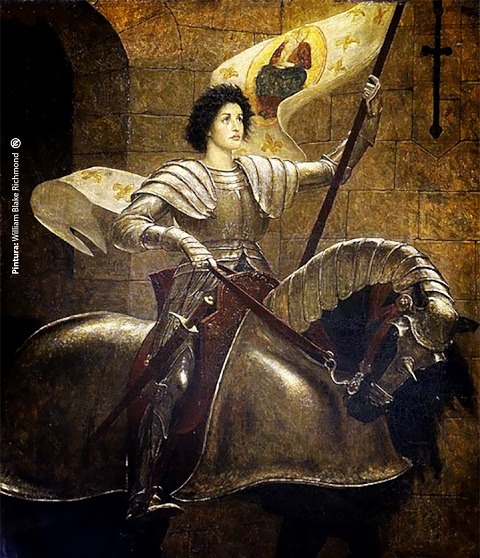
Irrevocable suffering
Embrace, dear friend, what has been assigned to you, by God, as a quota of irrevocable suffering.
You will know you are dealing with this kind of indisputable vicissitude, when linked to it are, in a inextricably and indissolubly manner, grave moral duties that your conscience points to you as essential, nonnegotiable…
Not every pain can have immediate relief, and often you will find, in your existential journey, pains married to sacred pleas of the heart, such as those of the Ideal or those concerning to affections that constitute your personal responsibility, before the Courts of Heaven.
Be careful with the escapist immediacy and the irresponsible hedonism of those who run away from what is their duty. Do not allow yourself to be counted among those who desert in the field of the Spirit. Choose the alignment with those who prefer the self-martyrdom to negligence in the chapter of the fundamental.
Matheus-Anacleto (Spirit)
Benjamin Teixeira de Aguiar (medium)
Aracaju, Sergipe, Brazil
August 16, 2017
A dialogue on abuses of power
Eugênia, do you want to speak to our netizens?
Yes.
What subject would you like me to address?
The subject about abuses of power.
Right. What do you have to tell us?
That it is human nature to commit abuses of power, even if it is in a very subtle way. For instance: the father who overly punishes his child, or belittles his or her opinions, for being a child; the wife who exploits her frail and needy husband, vampirizing him financially; the businessperson who abuses the needs and goodwill of their employees, who are earning little and working hard.
It is very difficult for people to see themselves as abusers. Usually, they have eyes only for those who abuse them.
That is exactly why I asked for us to speak about this. In this age of consciousness awakening and of universalized protest, individuals are, due to their low degree of psychological maturity, prone to see themselves as victims. This is not useful. It is important that each one sees, in oneself, what needs to be changed, instead of searching for flaws in others, because, proportionally to the level of conscience and to the personal history of conveniences or difficulties that each one has, very often the accusers have much less rights than the ones that are being accused. The mere fact of adopting the accusatory posture already denotes a certain deficit of lucidity and intellectual-moral development. Those who have matured have a high level of tolerance for the deficiencies and ambiguities of others. They defend themselves, but in a careful and controlled manner, never transforming the defense into a vengeful attack.
Abuse has many forms, not merely one. Sexual abuse is perhaps the least important one, except when it comes to children, who always deserve our full protection, because of their immense emotional and mental vulnerability, besides their obvious physical weakness. In the adult life, abuse is commonly generalized to one’s feelings, opinions, way of being, their choices, preferences and affinities. The look of criticism or disdain is often considered acceptable and normal, but, after a thousand times, it can lead someone to suicide or insanity. The sarcastic word or the initiative to humiliate someone, so common in interpersonal relationships, greatly reveals how people, on Earth, have strong inclinations to abuse, especially to abuse the weakest, or those of whom seem unable to protect themselves from the onslaught of others. Cowardice and vileness, thus, express themselves without punishment, and precisely because they choose situations where there are no punishments, these people are even more condemnable, contrary to those who, at least, have the merit of courage to confront what was established.
Do you want to say anything else about this?
Let each one of us remember the scene in which Jesus, before the adulteress caught “in the act”, at the imminence of being lapidated (stoned). He turned to those of whom felt so clearly superior to her, at the point of placing themselves in the position of divine avengers, decreeing and provoking her death: “Let anyone who is without sin throw the first stone.” And we could still give continuity to the Master’s thought and paraphrase Him: “Whosoever has the lesser sin throw the first stone.”
The adulteress could be rebelling against the abusive dictatorship of the time, of being forced to marry those she did not love, which today would be very well seen and even applauded, as an unprecedented courage of confronting murderous conventions, such as those of Jesus’ time, in the name of an ideal. But the question is this: at the time, she was regarded as a marginal of society, and the Christ was considered very merciful for defending her. Perhaps, it was not just that, but also the fact that the Master was protecting those who deserved protection, in a moment of extreme injustice.
In that occasion, Jesus releases the condemned woman and tells her to not “sin” again. Studying etymologically the meaning of the word “sin”, we will find the indication that the term is about “missing the mark,” which, without a doubt, what she had done, to a certain extent, was to confront an entire social system that would not change overnight. With that, we want to draw attention to the fact that, often, what is seen as a great mistake, in a certain time, can become, in future generations, not only not a mistake, but an exceptional accomplishment, just too avant-garde to be assimilated by contemporaries of the one who makes him or herself the messenger of progress. And, therefore, often those who attack someone for considering him or her an “abuser” may be acting much more like abusers themselves, in the eyes of God and His representatives, than those who they accuse. And, without a doubt, standing against the Creator Himself and His Emissaries does not seem to be good business for anyone. For no other reason, Jesus said: “You will be measured in the same way you measured others,” or, even more emphatically, “Do not judge other people. Then you will not be judged.” (NIRV, Matthew 7:1-2)
Spirit Eugênia-Aspásia
Medium: Benjamin Teixeira de Aguiar
February 15, 2004

Finding ideal companies
Do you want to find ideal companies? Live your ideals. Become an accomplished and interesting person, via the happiness that will naturally exude from you.
Then, you will notice that neither you are ideal nor can people be ideal, but you will attract better companies and will be able to select them, in such a way as to make yourself even happier, establishing always merrier relationships, as long as: 1) you stay focused on accomplishing your life projects, rather than looking for individuals as a means of fulfilling your need for self-realization, and 2) you do not fall into the temptation to fit into the expectations of the new partners who will have arrived in your existential paths.
Nothing is worth more than following one’s own vocation. Whoever is really destined to be by your side will find adjustments for this; otherwise, you must, courageously, face the choice for the rupture and open yourself up to new beginnings, even if faced with periods of apparent loneliness.
If you are in good company with your own Best-Self, you can better channel, to yourself, the Presence of God and His-Her Emissaries. And your personal glow will proceed sparkling in the darkness of human hearts… and other like-minded spirits will appear, evidently far more in line with your way of being than the creatures who once enjoyed your intimacy, even though, before their due departure, they seemed indispensable or too special to be liberated and left to their own paths…
Temístocles (Spirit)
Benjamin Teixeira de Aguiar (medium)
Porto Alegre, Rio Grande do Sul, Brazil
June 26, 2017
|
|
